
Turn one rule off to learn what it controls
Paint gates are rules that allow artwork onto some faces and exclude it from others. To investigate the cockpit border, a disposable diagnostic process removed individual gates while preserving the camera and source candidate. Removing the upward-facing rule restored small forward cuts, identifying a specific exclusion error. It did not remove the larger shoulder taper.
That result narrowed the problem. The small cuts needed a local receiver exception. The larger discontinuity involved the coordinates of the surfaces visible to the camera. Gate-off images deliberately permit invalid paint elsewhere, so they are counterfactual tests, not approved replacement materials. A change that explains a defect is not automatically a finished fix.
Drag the divider on the image. Keyboard: arrow keys, Home or End.
Move the boundary, preserve the identity
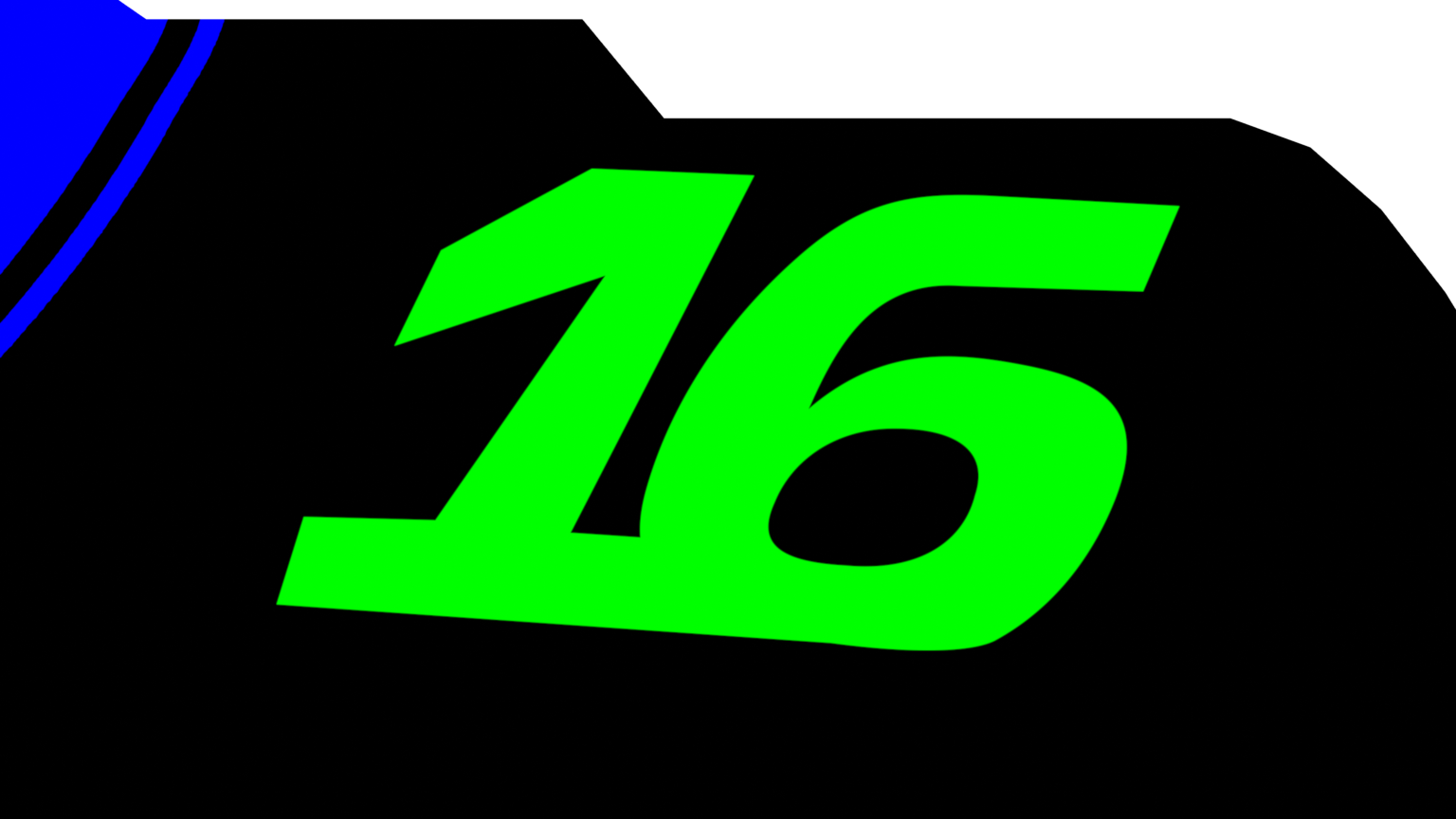
The number 16 needed its reference-derived shape and scale. Where the white body field approached it, shrinking the number would have made clearance easier while weakening the brief. The correction moved the paint boundary instead. Surface sampling and an actual shader collision render then checked whether number ink overlapped the white field on either side.
The reviewed render recorded zero overlapping pixels for the tested number regions. That was useful because it examined the applied artwork, including its masks and receiving rules. It supported this particular clearance decision; it was not a general claim that every painted boundary on the car was exact.
 Inspect image
 A slot cannot be solved with paint
The rear wing exposed a more consequential review error. A continuous sheet carrying IBM artwork had become a protected implementation because its graphic treatment had passed. The native rear reference showed something different: two blue surfaces with a real curved opening between them. Further seam and collision cleanup would only have refined the wrong representation.
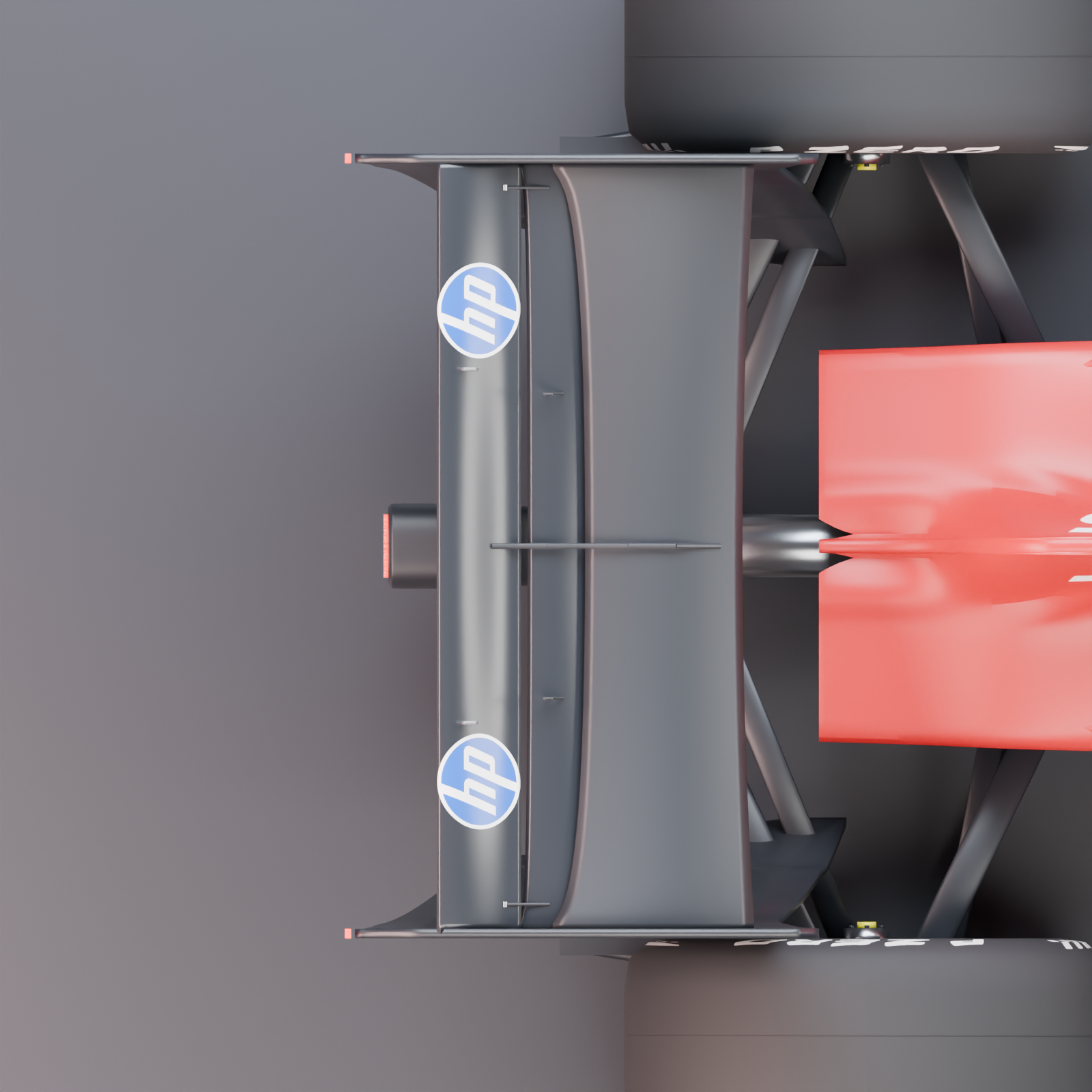
The work returned to surface ownership and negative space. IBM’s composition was applied across the two legitimate rear skins while the open slot remained open. HP belonged on the upper-front surfaces. The old continuous-sheet branch was retained as rejected evidence, rather than quietly rewritten as though the correct structure had existed throughout.
One final IBM correction was deliberately smaller. Its upper blue margin was only about 0.53 mm. Moving the artwork down, with its width and proportions unchanged, increased the measured margin to about 4.575 mm. The same rear-detail view confirmed a complete top row and visible blue separation. Geometry and logo scale did not need another revision.
Drag the divider on the image. Keyboard: arrow keys, Home or End.
 Inspect image
  Inspect image